
April is when a spring series gets decided. The schedule, staffing and registration plan you set now are what you'll be running in May. Spring tournament season is make-or-break time for cardrooms. The rooms that nail their event calendar planning now will cruise through their busiest months. The ones that wing it? They'll be putting out fires all season long.
Your April planning decisions will determine whether your spring poker tournaments run smoothly or turn into a mess.
The Scheduling Trap Most Rooms Fall Into
It happens every year: rooms get excited about their spring series and pack their calendar with events. A $300 NLH on Tuesday, a PLO tournament Wednesday, a $500 deepstack Thursday. It looks impressive on paper.
Then reality hits. The Tuesday event comes up short of the entries it needs to cover its guarantee. The Wednesday PLO draws a smaller field than its structure was built for. By week two, you're either canceling events or running overlays that kill your margins.
The rooms that get this right start with their data, not their dreams. They look at last year's spring numbers — which events actually hit, which ones struggled, what days worked best. Compare each event's entries against its guarantee. If your mid-week tournaments consistently came up short, cut them or fold them into a stronger night. A shorter calendar of events that fill beats a long one you have to subsidize.
Build your schedule around events you know will work, then add experimental tournaments once your core calendar is solid. Your floor staff will thank you, and your bottom line will too.
Registration Workflow Planning
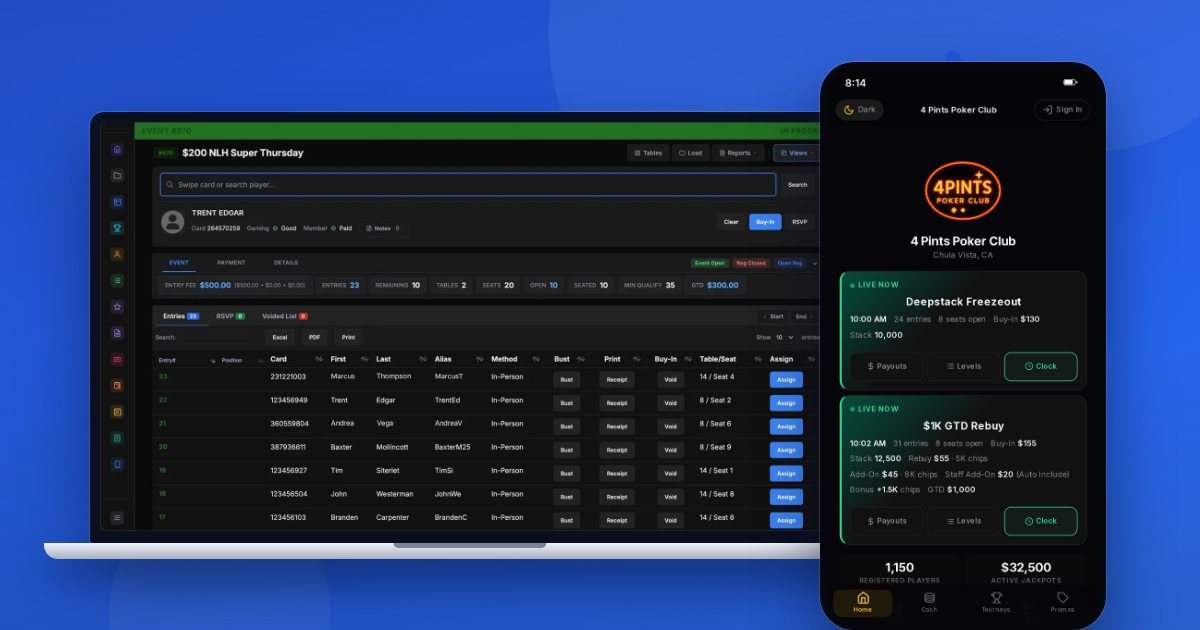
Tournament management becomes much harder when you're running multiple events per week. The usual trouble spots are overlapping registration periods, players trying to register for the wrong event, and floor staff manually tracking who's in what tournament.
The smart operators think through their registration workflow before the season starts. They map out registration windows, decide whether to allow online pre-registration, and train their staff on handling multi-tournament nights. If you run more than one flight of the same event, say a Friday night flight and a Saturday morning flight, test your registration process end to end in March. April is too late to find the gaps.
Consider your peak registration periods too. If you're running satellites into a main event, expect registration chaos the night before Day 1A. Plan for it. Have extra staff scheduled, clear procedures for handling last-minute entries, and a backup plan when your registration area gets swamped.
Promotional Integration
Here's where most spring planning falls apart: rooms treat tournaments and promotions as separate things. Your high hand promotions keep running during tournament play. Your membership rewards program doesn't account for tournament entries. Your marketing team promotes events that conflict with your cash game promotions.
Bring them together in your April planning. Decide whether tournament entries earn promotion points. Decide how your high hand promotion runs while a tournament is in play. Consider tournament vouchers as a promotional reward for cash game players.
The shift is to stop treating tournament management as separate from your overall room operations. Plan the series so it feeds players into cash games and your cash game promotions drive tournament entries, so the two work together instead of competing for the same players.
Your spring tournament calendar isn't just about events — it's about creating a connected experience that keeps players in your room longer and coming back more often.
If your spring calendar is still coming together, book a quick demo and we'll show you how rooms plan a tournament season in CardOpz.